
Ahead of its mid-quarter policy, the Reserve Bank on Friday said its monetary actions in the coming months will be determined by the outlook on monsoon and ensuing impact on inflation.

The Reserve Bank of India on Wednesday said it is vigilant to the possibility of overheating in the economy and will do everything to prevent such an occurrence.
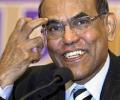
Monetary policy committee had recommended no change in the key rate.
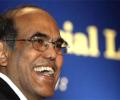
RBI Governor D Subbarao says banks' response to RBI's monetary intervention is asymmetric.
Slowdown in growth is the most worrisome factor and volatile capital flows have made the country vulnerable to "stops and reversals", RBI Governor D Subbarao said.
Within days of assuming charge, he faced allegations of having made RBI the finance ministry's extension counter.
RBI's task was made more difficult by exchange rate volatility.
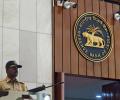
Reserve Bank Deputy Governor Michael Patra on Wednesday said the central bank's views about cryptocurrencies might have delayed the government's proposed legislation on crypto assets. Emphasising that the Central Bank Digital Currency (CBDC) will be introduced in FY23 as announced by Finance Minister Nirmala Sitharaman in the Budget speech, Patra said India will proceed very gradually on the subject as there are concerns on privacy, its impact on monetary policy formulation and energy intensity. The government had plans to introduce a bill on cryptocurrencies like Bitcoin during the Winter Session of Parliament in November-December 2021 but did not introduce it.

The full text of RBI governor D Subbarao's last speech, where he blames the UPA government for the fiscal mess

Former Reserve Bank of India Governor Duvvuri Subbarao has said the central bank could lose control over money supply and inflation management if cryptocurrency is allowed in the country. Speaking at a webinar organised by the National Stock Exchange (NSE) and New York University (NYU) Stern School of Business, Rao also said India's case for issuing a central bank digital currency (CBDC) may not be strong as there are capital controls. "Crypto is backed by algorithms and there is fear that the central bank might lose control over money supply and inflation management.

The finance ministry is also collating the data on entire food supply chain to identify the bottlenecks in the process.

Subbarao's remarks come against the backdrop of Finance Minister P Chidambaram's assertions in recent weeks that RBI should not focus solely on containing inflation but also look at the larger mandate of growth and job creation.
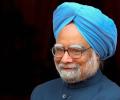
Former Prime Minister Manmohan Singh's 1991 budget unshackled India's economy, significantly enhancing the economic prospects for hundreds of millions of Indians, first deputy managing director of the International Monetary Fund (IMF) Gita Gopinath said on Friday.

The Reserve Bank of India (RBI) on Thursday said capital inflows could hurt the economy if they exceeded the absorptive capacity, adding that there were no easy ways to deal with excess flows.

From a national point of view, inflation is the biggest threat posed by finance ministers.
.jpg)
Subbarao also said credible fiscal consolidation is a pre-condition for stabilising inflation and in securing non-inflationary growth.
.jpg)
Currently, the cash reserve ratio is pegged at a low of 4 per cent, while statutory liquidity ratio that includes securities such as government bonds, stands at 23 per cent, down from 25 per cent in 2010.
This was the first meeting between the RBI Governor and Chidambaram following his taking over the charge of the Finance Ministry last week.
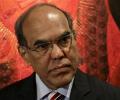
Subbarao said, short-term as well as medium-term prospects or Indian economy continue to be grim. Fiscal deficit is going to be much higher, the debt burden much larger and the financial sector will be in a worse shape.

President-elect Donald Trump's warning that BRICS countries will face 100 per cent tariffs if they choose to move away from the US dollar is unclear to what extent he will carry out his threat, as it remains to be seen if the US laws permit such an action, former RBI Governor Duvvuri Subbarao said on Monday. He also said even for BRICS, there are internal differences about bringing out an alternative to the US dollar.

Leaving it to Parliament the issue of amending laws to provide heavier penalty on banks indulging in such acts, RBI Governor D Subbarao also dismissed perceptions that the central bank was going soft on errant banks.
After fighting inflation for more than two years, Reserve Bank of India (RBI) Governor Duvvuri Subbarao finally managed to bring it below the five per cent level - the tolerance level of the central bank - in FY14.
Interview with the Governor of Reserve Bank of India.
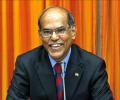
In a forthright "last public lecture" before he retires next week, RBI Governor D Subbarao was on Thursday sharply critical of the government, blaming its "loose fiscal stance" for the current economic woes, and warned that the root cause of rupee depreciation is "domestic structural factors."
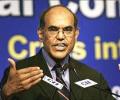
A revival in investment activity, which is key to stimulating growth, depends particularly on the recent policy announcements by the government being translated into effective actions, Subbarao said while announcing the second quarterly review of the monetary policy.

Accepting that inflation had increased in past few years, the RBI governor said that though they had somewhat succeeded in containing it in past two years, it is still there.
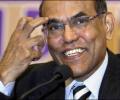
Reserve Bank of India (RBI) Governor D Subbarao, often criticised for being "behind the curve", took market players and his critics by surprise.
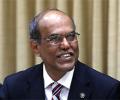
The bank is due to review the monetary policy on July 30.

The Reserve Bank on Thursday said it is considering the possibility of allowing Islamic financial institutions to function as NBFCs since Islamic banks are not permitted under the present laws.
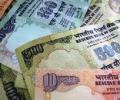
Describing the annual monetary policy announced by RBI Governor D Subbarao as a progressive one, Ernst & Young India's Ashvin Parekh said, "We have almost reached a point where inflation has become unmanageable and RBI has clearly indicated that bringing down inflation to a comfortable level is its top priority."

The speed at which he led the central bank in different areas -- ranging from internal reorganisation to inflation fighting, stabilising the currency, taking on rogue corporations, cleaning up bank balance sheets, and opening the sector -- makes one believe that Rajan knew he had only three years to do his job. A fascinating excerpt from Tamal Bandyopadhyay's MUST-READ Roller Coaster: An Affair with Banking.

On economic growth rate, Subbarao said RBI's projection for the current fiscal (2012-2013) is 6.5 per cent.
In an interview with the Press Trust of India on Sunday, Finance Minister P Chidambaram explained that there was no "antagonism" between his ministry and the Reserve Bank of India (RBI).
Given that food inflation remains high, the inflation outlook will be influenced by concerted efforts to break food inflation persistence.
In the light of credit offtake not picking up despite ample liquidity in the system, the RBI is likely to keep policy rates unchanged in its annual monetary policy, to be unveiled on Tuesday, but may impress upon banks to step up lending to sectors slowing down.
In view of the need to enhance credit delivery to the employment- intensive micro and small enterprises sector, it has been decided to provide refinance of an amount of Rs 7,000 crore (Rs 70 billion) to the Small Industries Development Bank of India under the provisions of Section 17(4H) of the Reserve Bank of India Act, 1934.

RBI, Sebi had imposed certain restrictions on futures markets by way of raising margins.

The Reserve Bank on Friday said the agriculture growth will be muted this fiscal on account of the impact of poor monsoon on kharif crops.
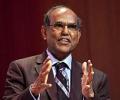
Guidelines say that new banks need to set up 25 per cent branches in unbanked areas.
The Reserve Bank of India Governor D Subbarao has exhorted the apex bank's staff in his New Year message to convert present crisis into an opportunity, while maintaining that the crisis will be deeper and prolonged.
